The United Arab Emirates’ rapid development and growing population have created substantial waste management challenges requiring sophisticated infrastructure solutions. Abu Dhabi and Dubai generate millions of tons of municipal solid waste annually, demanding engineered landfill facilities that protect groundwater resources, prevent soil contamination, and manage environmental impacts throughout decades of operation. At the foundation of these critical environmental protection systems lies advanced geomembrane liner technology, with wedge welding serving as the essential installation method creating reliable, long-lasting barriers between waste materials and the surrounding environment. This comprehensive exploration examines how wedge welding technology enables the UAE’s modern waste management infrastructure, analyzing technical requirements, quality standards, installation challenges, and the environmental benefits these systems deliver.
UAE Waste Management Landscape
Growing Waste Generation
The UAE’s development creates substantial waste streams:
Municipal Solid Waste: Dubai generates approximately 2.5 million tons of municipal solid waste annually, with per capita generation rates among the world’s highest at roughly 2.7 kg per person daily. Abu Dhabi produces similar volumes proportional to population. This waste stream includes residential garbage, commercial waste, and non-hazardous industrial materials requiring proper disposal.
Construction and Demolition Waste: The UAE’s continuous construction activity generates enormous quantities of construction debris, concrete, metals, wood, and other materials. While much of this material undergoes recycling, residual waste requires landfilling, creating additional capacity demands on waste management systems.
Industrial Waste: Manufacturing facilities, oil and gas operations, and other industrial activities generate waste streams ranging from relatively benign materials to hazardous substances requiring specialized containment. Industrial waste management infrastructure represents a critical subset of overall landfill systems with particularly demanding liner requirements.
Commercial and Institutional Waste: Hotels, restaurants, shopping centers, healthcare facilities, and other commercial operations contribute significant waste volumes with characteristics sometimes requiring specialized handling separate from residential waste streams.
Regulatory Framework
UAE environmental protection regulations drive landfill design standards:
Federal Environmental Laws: UAE Federal Law No. 24 of 1999 for the Protection and Development of the Environment establishes baseline environmental protection requirements including waste management standards and enforcement mechanisms.
Dubai Municipality Regulations: Dubai’s waste management operations fall under Dubai Municipality oversight, with comprehensive regulations addressing landfill siting, design, construction, operation, monitoring, and closure. These regulations mandate engineered liner systems meeting international standards for environmental protection.
Abu Dhabi Standards: The Environment Agency – Abu Dhabi (EAD) and Tadweer (Abu Dhabi Waste Management Center) establish waste management requirements for the emirate, including detailed landfill design specifications ensuring groundwater and soil protection.
Free Zone Requirements: Industrial free zones including Jebel Ali (JAFZA), Dubai South, and Abu Dhabi’s Khalifa Industrial Zone (KIZAD) maintain independent waste management oversight, often establishing standards exceeding general requirements due to concentrated industrial activities and potential hazardous waste generation.
Landfill Liner System Design
Multi-Barrier Approach
Modern engineered landfills incorporate comprehensive liner systems:
Primary HDPE Liner: The principal barrier preventing leachate migration consists of high-density polyethylene (HDPE) geomembrane, typically 1.5mm to 2.5mm thickness depending on waste characteristics and regulatory requirements. This liner must maintain integrity throughout the landfill’s active life and post-closure monitoring period spanning 30-50 years or more.
Leachate Collection System: Above the primary liner, drainage layers collect leachate (liquid percolating through waste) and direct it to collection sumps for removal and treatment. This system prevents leachate accumulation that would create hydrostatic pressure potentially compromising liner integrity.
Secondary Liner and Detection System: Many facilities incorporate secondary HDPE liners below the primary liner, with leak detection systems between liner layers enabling identification of primary liner breaches if they occur. This redundancy provides critical environmental protection for facilities handling potentially hazardous materials.
Foundation Preparation: Below liner systems, prepared foundations provide stable, smooth surfaces preventing puncture from underlying materials while incorporating drainage layers managing groundwater that might otherwise create uplift pressure against liners.
Cover Systems: Completed landfill sections receive cover systems including HDPE geomembranes preventing rainwater infiltration that would generate additional leachate requiring collection and treatment. These cover systems prove as critical as bottom liners for long-term environmental protection.
Wedge Welding Requirements for Landfill Applications
Critical Quality Imperatives
Landfill liner installations demand absolute reliability:
Zero-Defect Expectation: Unlike some geomembrane applications where minor defects create manageable problems, landfill liner failures can result in groundwater contamination with severe environmental consequences and potentially enormous remediation costs. This reality drives quality standards far exceeding typical construction tolerances.
Long-Term Performance: Liners must maintain integrity for decades, functioning throughout active landfill operations (10-30 years) plus post-closure monitoring periods extending 30 years or more. Welding methods must create seams as durable as base membrane material, ensuring seams don’t become failure points as systems age.
Regulatory Compliance: Federal and emirate-level regulations establish specific installation standards including welding methods, testing frequencies, documentation requirements, and third-party oversight mandates. Non-compliance risks project rejection, costly rework, and potential legal liability.
Extreme Consequences of Failure: Liner breaches allowing leachate escape into groundwater aquifers create contamination potentially affecting drinking water supplies, agricultural operations, and environmental health. The catastrophic nature of these failures justifies extraordinary quality emphasis during liner installation.
Technical Specifications
Landfill liner welding must meet demanding standards:
Seam Strength Requirements: Specifications typically require wedge-welded seams achieve minimum 85-90% of base membrane shear strength and 80% of peel strength. Quality installations routinely exceed these minimums, with properly executed welds often approaching or exceeding 95% of base material strength.
Temperature and Speed Parameters: Installation teams must establish and document optimal welding parameters for specific materials, ambient conditions, and equipment characteristics. Dubai and Abu Dhabi’s extreme summer heat requires substantial parameter adjustment from baseline manufacturer recommendations, with surface temperatures exceeding 70°C creating pre-heated materials needing reduced welding temperatures.
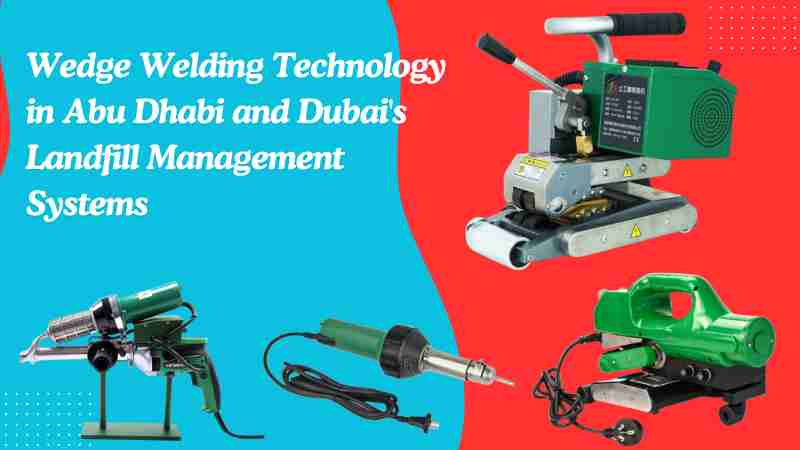
Dual-Channel Weld Requirements: Most landfill specifications mandate dual-channel wedge welding creating two parallel seams separated by a small gap, enabling air pressure testing verifying seam continuity without damaging the installation. This non-destructive testing capability proves essential for confirming complete installation quality.
Equipment Capabilities: Landfill installations require sophisticated equipment from reputable sources like an established Dubai industrial wedge welder supplier, ensuring machinery incorporates advanced temperature control, data logging, and reliability essential for these demanding applications.
Installation Challenges in UAE Conditions
Environmental Factors
UAE climate creates unique installation challenges:
Extreme Surface Temperatures: Summer landfill site conditions can see soil and membrane surface temperatures exceeding 75°C. These conditions require early morning installation schedules (starting 5:00-6:00 AM), frequent parameter reassessment as temperatures rise, and sometimes work suspension during peak heat hours when quality control becomes difficult.
Dust and Wind Management: Open landfill sites in desert locations experience constant dust exposure with periodic sandstorms. Membrane surface preparation requires meticulous cleaning immediately before welding, while wind creates material handling challenges and potential seam contamination requiring careful monitoring.
Subgrade Preparation: UAE’s predominantly sandy soils and occasional rocky areas require careful foundation preparation preventing liner puncture. This preparation includes removal of sharp objects, placement of smooth sand layers, and sometimes installation of geotextile cushioning layers protecting membranes from stress concentration.
Remote Site Logistics: Landfill facilities typically occupy remote locations away from urban centers, complicating equipment transport, spare parts access, and technical support availability. This remoteness demands reliable equipment requiring minimal service and self-sufficient installation teams capable of troubleshooting without immediate external support.
Large-Scale Installation Demands
Landfill projects involve enormous liner areas:
Massive Surface Areas: Individual landfill cells may require 50,000-150,000 square meters of liner, with complete facilities encompassing multiple cells totaling several hundred thousand square meters. These scales demand efficient installation methods—wedge welding’s speed advantage (10-15 meters per minute on straight seams) proves essential for completing projects within reasonable timeframes.
Panel Prefabrication: Some installations utilize panel prefabrication where large membrane sections are welded in controlled factory conditions before transport to sites for final installation. This approach, while requiring specialized equipment and logistics, can improve quality and reduce field installation time.
Multi-Crew Coordination: Large projects often employ multiple installation crews working simultaneously on different liner areas. This parallelization accelerates completion but requires careful coordination, consistent quality standards across crews, and systematic quality control ensuring uniform results.
Quality Assurance Protocols
Construction Quality Assurance (CQA)
Landfill installations require independent quality oversight:
CQA Specialist Requirements: Virtually all major landfill projects mandate certified Construction Quality Assurance (CQA) inspectors providing independent monitoring throughout installation. These specialists, typically holding certifications from organizations like the Geosynthetic Institute, review submittals, witness trial welding, monitor production operations, and verify testing compliance.
Trial Welding Programs: Before production welding begins, contractors must demonstrate capability through trial welding using project materials and site conditions. Trial welds undergo destructive testing (typically 5 test coupons minimum) verifying seam strength exceeds specifications. Only after successful trial welding can production operations commence.
Production Monitoring: CQA inspectors observe production welding operations, recording ambient conditions, verifying equipment calibration, witnessing quality tests, and documenting any defects or repairs. This continuous oversight ensures specification compliance while providing permanent project quality records.
Testing Requirements
Comprehensive testing verifies liner installation quality:
Non-Destructive Testing: Dual-channel wedge welds undergo 100% air pressure testing, with inspectors using specialized equipment pressurizing the gap between parallel weld beads to 200-300 kPa (typically 30-40 psi) and monitoring pressure for 5-10 minutes. Pressure loss indicates defective welds requiring correction. This testing approach, impossible with single-pass welding methods, provides comprehensive quality verification without damaging the installation.
Destructive Testing Frequency: Specifications typically mandate destructive testing on samples extracted at intervals of 150-300 meters of welding, with some projects requiring even more frequent testing. Samples undergo laboratory peel and shear testing, with results documented in formal test reports. Failed tests trigger investigation of affected seam sections and potential rework requirements.
Vacuum Box Testing: Single-pass welds and extrusion-welded details (corners, penetrations, repairs) undergo vacuum box testing since air pressure testing isn’t possible. Technicians apply soapy water solutions to welds, place vacuum boxes creating negative pressure, and observe for bubble formation indicating leaks.
Spark Testing: Completed liner installations sometimes undergo electrical continuity testing using specialized equipment detecting breaches in geomembrane electrical resistance. This method can identify punctures, thin spots, or installation damage requiring repair before waste placement begins.
Complementary Welding Technologies
Complete landfill liner installations require multiple joining methods:
Extrusion Welding for Details: Complex geometries including corners, sumps, penetrations for leachate collection pipes, and connections to concrete structures require hot air extrusion welding. This technique uses heated air and thermoplastic welding rods creating reliable joints where automated wedge welding equipment cannot operate. Contractors working with a knowledgeable hot air welder equipment UAE supplier ensure access to appropriate equipment for comprehensive installation capabilities addressing all liner requirements.
Fusion Welding: Some specialized connections may utilize fusion welding techniques where heated plates or wedges create bonds without filler material. This approach suits specific detail conditions complementing primary wedge welding and extrusion welding methods.
Cap Strip Application: Exposed edges and terminations often receive cap strips—narrow geomembrane pieces welded over underlying seams or edges providing additional protection and weatherproofing. These details require careful execution ensuring long-term performance.
Environmental Benefits and Performance
Groundwater Protection
Properly installed liner systems deliver critical environmental benefits:
Contaminant Barrier: HDPE geomembrane liners prevent leachate migration into underlying soils and groundwater aquifers. Given UAE’s limited groundwater resources and their importance for agricultural and supplemental municipal supply, this protection proves absolutely essential for environmental sustainability.
Monitoring and Response: Leak detection systems between primary and secondary liners enable early identification of breaches, allowing corrective action before significant contamination occurs. This monitoring capability provides important safeguards for long-term environmental protection.
Regulatory Compliance: Comprehensive liner systems meeting or exceeding regulatory requirements demonstrate environmental stewardship while avoiding penalties and ensuring facility operating permits remain valid throughout planned service lives.
Long-Term Performance Data
UAE’s older landfill installations provide performance validation:
Proven Durability: HDPE geomembrane liners in UAE facilities have demonstrated reliable performance for 15-20+ years in the region’s extreme conditions, validating material selection and installation methods. Properly installed wedge-welded seams show no signs of degradation in periodic inspections of accessible liner areas.
Quality Correlation: Facilities emphasizing installation quality through comprehensive CQA programs, systematic testing, and contractor accountability demonstrate superior long-term performance compared to installations where quality received less emphasis—validating investments in proper installation methods and oversight.
Economic Considerations
Lifecycle Cost Analysis
Comprehensive economic evaluation encompasses multiple factors:
Installation Costs: Quality liner installation including proper equipment, trained personnel, and thorough testing represents substantial project expense—typically AED 40-80 per square meter for complete primary liner systems depending on thickness, site conditions, and quality requirements.
Risk Mitigation Value: While quality installation costs more than minimal approaches, avoided costs from environmental contamination events, regulatory penalties, or facility closure orders dwarf installation cost differentials. Single contamination incidents can cost millions of dirhams in remediation, making quality installation essentially “free” insurance.
Long-Term Performance: Reliable liner systems lasting throughout planned facility service life avoid costly remediation, liner replacement, or alternative waste handling that premature failures might necessitate. This long-term reliability provides value difficult to quantify but clearly substantial.
Regional Waste Management Investment
Landfill infrastructure represents significant government commitment:
Facility Development: Dubai and Abu Dhabi have invested hundreds of millions of dirhams in engineered landfill facilities including Al Warsan Waste Management Centre (Dubai) and Al Dhafra landfill (Abu Dhabi). These facilities incorporate state-of-the-art liner systems, leachate management, gas collection, and environmental monitoring.
Capacity Planning: Both emirates continue developing additional waste management capacity addressing population growth and increased waste generation. This ongoing development creates sustained demand for quality geomembrane installation capabilities.
Technology Transfer: UAE waste management sector development has facilitated technology transfer from international leaders to local contractors, building domestic capabilities that support the sector while enabling potential export of expertise to neighboring countries facing similar challenges.
Future Developments
Technology Advancement
Emerging capabilities will enhance landfill liner systems:
Smart Liner Systems: Integration of fiber optic or electrical sensors within liner systems enabling real-time leak detection and structural monitoring represents developing technology that may transform landfill management, allowing proactive intervention before small issues become environmental problems.
Advanced Materials: Next-generation geomembrane formulations offering enhanced chemical resistance, improved flexibility for complex geometries, or extended service life may become available, though HDPE’s proven performance makes wholesale material changes unlikely absent compelling advantages.
Installation Automation: Robotic or semi-autonomous welding systems promise enhanced consistency while addressing potential labor constraints. These technologies, while not yet mature for complex landfill environments, represent long-term possibilities for installation advancement.
Waste Management Evolution
UAE waste sector continues developing:
Waste-to-Energy: Abu Dhabi and Dubai are developing waste-to-energy facilities reducing landfill disposal volumes while generating electricity. However, even these facilities produce residual ash requiring landfill disposal, ensuring continued need for quality liner systems.
Enhanced Recycling: Both emirates have established ambitious recycling and waste diversion targets. While successful diversion reduces landfill volumes, it concentrates remaining waste potentially creating more challenging leachate characteristics requiring equally robust or enhanced containment.
Regional Leadership: UAE’s investment in modern waste management positions the emirates as regional technology leaders, with potential to export expertise throughout GCC nations and broader Middle East region as environmental protection emphasis increases.
Conclusion
Wedge welding technology serves as the essential foundation for Abu Dhabi and Dubai’s engineered landfill systems, creating the reliable geomembrane barriers that protect groundwater resources and prevent environmental contamination from waste management operations. The combination of superior seam strength, installation efficiency, comprehensive testing capabilities, and proven long-term durability makes wedge welding the preferred and often mandated installation method for these critical environmental protection systems.
As the UAE continues developing sophisticated waste management infrastructure supporting population growth while meeting increasingly stringent environmental standards, the importance of quality geomembrane installation will only intensify. For contractors, equipment suppliers, environmental consultants, and government authorities, understanding wedge welding technology’s capabilities and requirements ensures successful project execution protecting the UAE’s environment and public health for generations to come—infrastructure investments as essential to the nation’s sustainable development as the more visible projects that capture public attention.